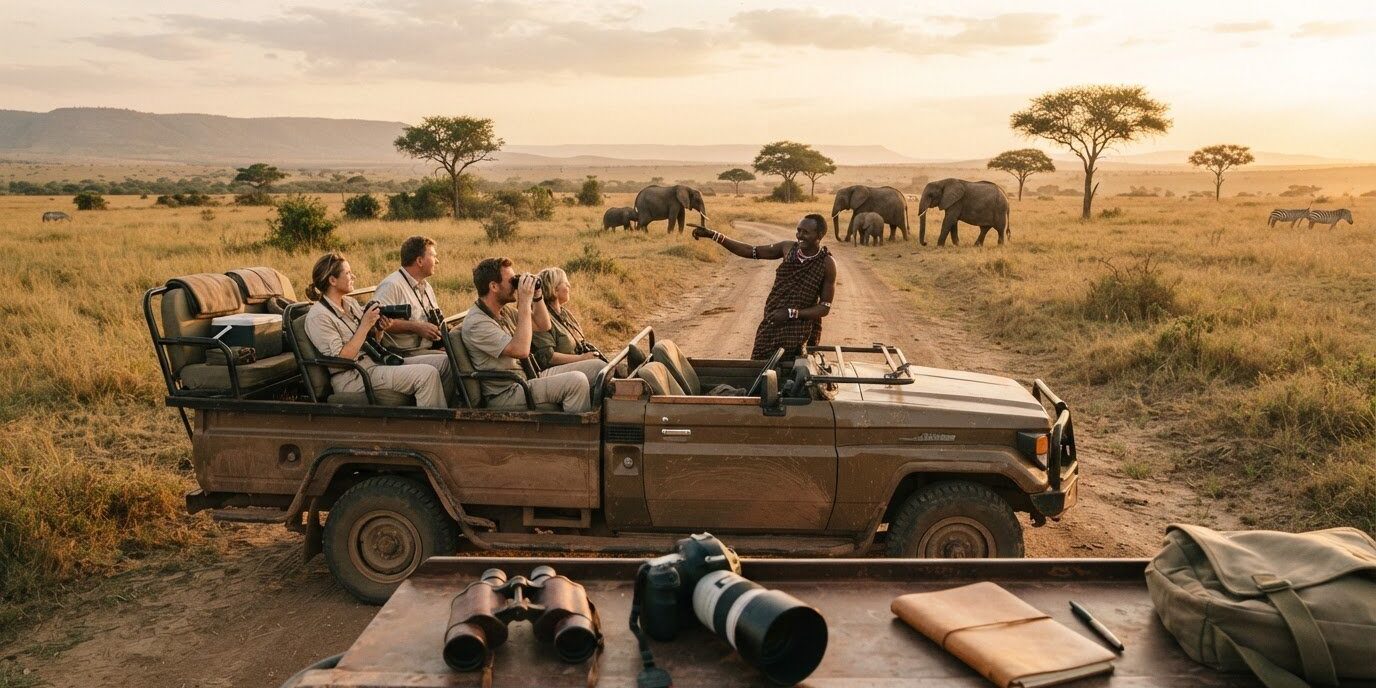
The best first decision isn’t which park to visit. It’s what you want your Kenya safari to feel like: unhurried days watching wildlife, a fuller route with several stops, or a trip that balances game drives with time to rest. Once you know your priorities, learning how to plan a Kenya safari becomes much more manageable.
It’s easy to feel overwhelmed by the choices. Season, wildlife interests, travel pace and the needs of your group all shape an itinerary. You don’t have to settle every detail at once. Start with the experience you’re hoping for, then work through the practical decisions in a clear order.
This step-by-step guide will help you choose a travel style and pace, consider how the season may influence your plans, and prepare the details that make an itinerary personal. You’ll also see how private and group safaris differ, and what to have ready before planning. City Sightseeing Tours’ local experts can help shape a customizable itinerary, coordinating transport, professional guides, park-entry arrangements and booked accommodation around the trip that suits you.
Key Takeaways
- Learn how to plan a Kenya safari by starting with your wildlife interests, preferred pace and practical needs.
- Use season and habitat as planning factors, while keeping wildlife sightings flexible rather than fixed.
- Compare private and group safari formats by the flexibility and shared experience that suit your party.
- Bring your dates, party needs, interests and constraints together in a short planning brief.
- See how local expertise can help shape a customized itinerary around your priorities.
How to plan a Kenya safari around your travel priorities
A Kenya safari for first timers can bring together memorable wildlife encounters, striking landscapes and welcome moments of rest. With many possible experiences, it can be hard to know where to begin. Start with what matters most, then let those priorities guide the route, pace and practical choices. That’s the simplest way to approach how to plan a Kenya safari without trying to fit every appealing idea into one trip.
Match your interests with your available time, preferred travel rhythm and the needs of everyone in your party. A useful plan doesn’t begin with a list of places. It begins with the experience you hope to have. For context, the Kenya Wildlife Service is responsible for conserving and managing national parks and wildlife sanctuaries, which form part of Kenya’s wildlife tourism landscape.
A well-planned safari gives your priorities room to shine while fitting your dates, party needs and preferred level of comfort. Once you’ve named those priorities, comparing itinerary options becomes easier. You can see which choices support your trip and which would add complexity without much value.
Start with the experience you want from a Kenya safari
Rank the experiences you’d most enjoy: wildlife viewing, varied scenery, photography, restful downtime or cultural experiences. Then separate your list into must-haves and nice-to-haves. For example, you might prioritize open grasslands and large grazing animals, while treating a forest habitat or extra activity as an option if the itinerary allows.
This distinction gives planning conversations a useful starting point. It also helps you make thoughtful trade-offs if your dates or travel days limit how much you can include.
Set the trip’s boundaries before choosing details
Write down how many days you can travel, who’s coming and which comfort preferences matter to the group. Consider whether anyone would appreciate a slower rhythm, fewer long transfers or more time to rest between activities. Fixed dates may narrow your options and influence how the days fit together. Flexible dates can leave more room to shape the plan around your interests.
Keep the wish list realistic. A short set of clear priorities gives a local expert a stronger foundation for tailoring an itinerary than a packed checklist in which every idea is marked essential.
Try this quick exercise before you compare trip formats or discuss a route:
- Must-haves: Name the experiences you’d be disappointed to miss.
- Nice-to-haves: Note what you’d welcome if time and the itinerary allow.
- Boundaries: Record your travel dates, party size, preferred pace and comfort needs.
Share this brief with the people travelling with you so differences in pace or interests surface early. With those preferences in hand, you can focus on how the season, wildlife interests and itinerary rhythm best suit your party.
How season, wildlife interests, and pace shape a Kenya safari
Once your priorities are clear, shape them around the natural conditions you’ll encounter. Season can influence landscapes, wildlife viewing and the feel of a trip. Habitat and animal movement also affect what you may see from day to day. Use these factors to guide your choices, not as a promise of particular sightings or a rigid schedule.
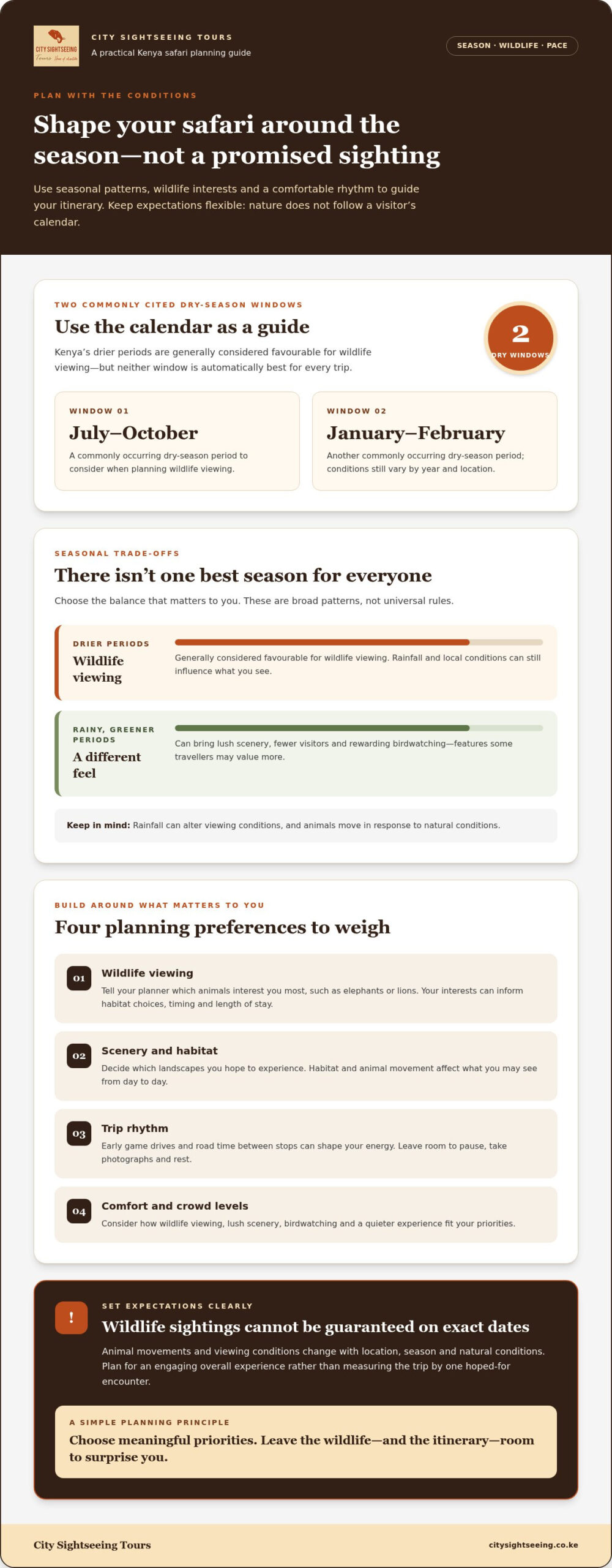
For broad travel planning, Kenya’s drier periods are generally considered favourable for wildlife viewing, while rainy, greener periods can bring different scenery, fewer visitors and rewarding birdwatching. These are helpful patterns, not universal rules. Conditions vary between years and locations, and each traveller may value a different balance of wildlife viewing, scenery, comfort and crowd levels. The Kenya Tourism Board offers official information about the country’s tourism landscape. A local expert can help translate your interests into a practical itinerary.
Use seasonality as a planning factor, not a guarantee
Dry seasons commonly fall between July and October and between January and February, but neither window is automatically best for every trip. Rainfall can alter viewing conditions, and animals move in response to natural conditions rather than a visitor’s calendar. Think about what matters most: easier wildlife viewing, lush scenery, birdwatching or a quieter travel experience. Build flexibility into your expectations, especially if your dates are fixed.
Wildlife sightings can’t be guaranteed on exact dates because animal movements and viewing conditions change with location, season and natural conditions. Plan for an engaging experience overall rather than measuring the trip by a single hoped-for encounter.
Balance wildlife interests with a comfortable trip rhythm
Some game drives begin early, and time on the road between stops can shape how much energy remains for the day. If elephants or lions are high on your wish list, tell your itinerary planner so those interests can inform the choice of habitats, timing and length of stay. Your guide can help set realistic expectations without promising an encounter.
Leave room to enjoy the experience. A schedule packed with long transfers and activities may leave little space to pause, take photographs or rest. Choosing a few meaningful wildlife and scenery priorities can create a more comfortable rhythm than trying to cover every possible experience.
- For photographers: Consider how much time you’d like for observation and unhurried moments, not only the number of stops.
- For keen wildlife watchers: Share the animals and habitats that interest you most, while staying open to unexpected encounters.
- For a gentler pace: Make rest and manageable travel days part of the itinerary discussion from the outset.
Thoughtful planning connects season, habitat and pace without pretending nature follows a timetable. To turn your interests into a tailored route, explore a custom Kenya safari itinerary shaped around your preferences.
Private or group safari: compare the planning trade-offs
Once you know what you want from the trip, consider how you’d like to travel. A private safari and a group safari can both make for a rewarding Kenya experience, but they suit different preferences around itinerary flexibility, shared company and daily rhythm. The right choice depends on your party and how you’d like each day to unfold, not on one format being universally better.
Use this comparison to clarify what matters most as you decide how to plan a Kenya safari:
Planning factor: Flexibility
Private: More scope to tailor the itinerary to your party’s interests and preferred pace.
Group: Plans are shared with other travellers, so individual adjustments may be more limited.
Planning factor: Shared experience
Private: Travel with your own party and shape the experience around its preferences.
Group: Share the safari experience with fellow guests, which can suit travellers who enjoy company along the way.
Planning factor: Daily rhythm
Private: The itinerary can be designed with your party’s preferred balance of activities and downtime in mind.
Group: Timing and pace are coordinated for the group, so you’ll have less individual control over the schedule.
Planning factor: Best fit to consider
Private: A party with specific interests or a preferred travel rhythm.
Group: A traveller who is comfortable experiencing the safari as part of a shared plan.
Think about how decisions will work for everyone travelling with you. A family with different rest needs, for example, may value more room to shape the day, while a solo traveller or couple may welcome the company of other safari guests. Neither preference is right for everyone. Choose the arrangement that feels comfortable and enjoyable for your party.
When a private safari may suit the plan
A private format may suit you if personal interests, party preferences or a gentler daily pace are central to the trip. With an itinerary tailored to your party, you can discuss how to prioritize particular experiences while keeping the overall rhythm comfortable. It offers flexibility in planning, though it can’t guarantee specific wildlife sightings or exclusive access to places or activities.
When a group safari may suit the plan
Explore a group format if you’d enjoy sharing the journey with other safari guests and are comfortable following a common itinerary. The shared structure can make planning straightforward, but timing and pace are shaped for the group rather than adjusted solely to your preferences. Consider how this fits your party before deciding.
City Sightseeing Tours offers customizable private and group safaris, with local experts helping shape itineraries around individual tastes. As you compare the formats, decide which matters more to you: flexibility to tailor the plan or the pleasure of a shared travel experience. That distinction can help you move from broad preferences toward an itinerary that feels like a good fit.
Turn your Kenya safari ideas into a practical planning checklist
A short planning brief turns inspiration into useful decisions. It helps you explain what matters to your party, what needs to be accommodated and where you’re happy to stay flexible. Keep it in one document so you can refer to it while discussing itinerary options and preparing for departure.
Prepare a concise safari planning brief
Capture the details that shape both the itinerary and your comfort. Mark essential needs separately from preferences you’d welcome if they fit. Include accessibility and dietary considerations early, so they can be part of the planning conversation rather than last-minute surprises.
- Note your preferred experiences. List the wildlife, scenery, photography, cultural interests and downtime you’d most enjoy. Mark each as a must-have or a flexible preference.
- Record your dates and available days. Include fixed arrival or departure dates, and note whether there’s any room to adjust them. This gives itinerary planning a realistic time frame.
- Describe your travelling party. Include who is travelling, any different needs within the group and the daily pace that would feel comfortable. Mention accessibility or dietary considerations without assuming a particular arrangement.
- Set comfort priorities and practical boundaries. Note the accommodation style you prefer, how much time you’re comfortable spending in transit and any other constraints that should guide the plan.
- Discuss the itinerary with a local expert. Share your brief and use it to talk through a route and rhythm that reflect your interests. Customized safari planning can bring together transport, professional guides, park-entry arrangements and booked accommodation.
- Review final preparations. Before departure, revisit your confirmed travel details, required documents and packing needs so they match the plans you’ve made.
Check the practical details before departure
Entry rules and health guidance can change, so rely on current official information rather than an old checklist or informal advice. International visitors can review Kenya’s latest entry instructions through the official Kenya eTA portal, including guidance relevant to their nationality and travel plans. Speak with a qualified health professional about personal health preparations, and review travel-insurance terms for your circumstances.
Pack for the transport and accommodation in your itinerary. Check any luggage guidance provided for your planned transport, and consider what you’ll want close at hand during travel days. A little preparation can make transitions more comfortable without overpacking for every possibility.
This is a practical foundation for how to plan a Kenya safari around your party, not a rigid script. To turn your brief into a tailored itinerary, explore a bespoke Kenya safari plan shaped around your interests and preferred pace.
Plan your Kenya safari with tailored local expertise
Your planning brief is more than a list of preferences. It gives a local expert a clear picture of the experience you hope to have, the pace that feels right and the practical needs your itinerary should respect. From there, route choices and trip arrangements can be considered together rather than as disconnected decisions.
What tailored safari planning can help coordinate
A customized Kenya safari itinerary can bring key arrangements into one coherent plan: ground transport, professional guides, park-entry arrangements and booked accommodation. Sharing your priorities helps local experts shape these elements around your individual tastes, whether you’re keen to focus on wildlife, allow more time to rest or balance different interests within your travelling party.
The connection between details matters. The pace of travel, where you stay and how your days are arranged all influence how the trip feels as a whole. A plan built around your preferences can help those pieces work together while staying grounded in your available dates and party needs.
Take the next step toward a safari that fits
Bring the useful details together before discussing your safari: preferred experiences, available dates, party composition, comfort priorities and any accessibility or dietary considerations. You don’t need to have every choice settled. A clear sense of what matters most gives the planning conversation a helpful starting point and leaves room for suggestions from local experts.
City Sightseeing Tours offers both private and group safari options, with local experts who can help plan an itinerary to suit individual tastes. A private format may allow the plan to be shaped more closely around your party, while a group format brings the shared experience of travelling alongside other guests. The right fit depends on your preferences and the kind of daily rhythm you’d enjoy.
If you’re still weighing up the details, share what you know so far, including your interests, dates, preferred pace and practical needs. Those priorities can guide the itinerary discussion. Planning a Kenya safari that feels personal starts with your hopes and shapes the arrangements around them with attentive local guidance.
Ready to begin? Discuss a tailored Kenya safari with the local team and take the next step toward a trip planned around you.
Let your safari plans take shape
Your first safari plan doesn’t need every detail decided. A clear idea of what you hope to experience is enough to begin shaping a trip that feels considered, comfortable and distinctly yours. The next step in learning how to plan a Kenya safari is to turn those hopes into a conversation about the journey you’d like to have.
With customizable private and group safari options, local experts can help develop an itinerary around individual tastes. Safari packages coordinate practical elements such as transport, professional guides, park-entry arrangements and booked accommodation, bringing the moving parts together as your plans take shape.
Share what you’re curious about, who’s travelling and what kind of pace would feel right. Your preferences can guide the planning, while local insight helps turn early ideas into a thoughtful Kenya safari itinerary. Plan a Kenya safari shaped around your interests and take your next step with confidence.
Your Kenyan adventure can begin with one simple idea. Let’s give it room to grow into a journey that feels right for you.
Frequently Asked Questions
Do I need a visa or electronic travel authorisation to visit Kenya?
Entry requirements depend on your nationality and can change, so check current Kenyan government guidance before booking or travelling. Most international visitors need an Electronic Travel Authorisation (eTA) before departure, while exemptions apply to some travellers. Use the official portal at etakenya.go.ke to check the requirements that apply to you, including application timing. Also review passport validity and any required travel documents for each person in your party.
What should I pack for a Kenya safari?
Pack comfortable clothing, sun protection and personal essentials, choosing items to suit your travel season and planned activities. A brimmed hat, sunscreen, comfortable walking shoes and a light layer can be useful starting points, though your needs will vary. As part of how to plan a Kenya safari, check luggage guidance for your transport and accommodation, and bring any personal medication you require in its original packaging.
Is travel insurance recommended for a Kenya safari?
Travel insurance can help you prepare for unexpected disruptions, but the protection offered depends on the policy you choose. Before purchasing cover, review the terms for medical care, trip cancellation, baggage and any activities you plan to take part in. Read exclusions and claim conditions carefully, and choose cover that reflects your health, itinerary and personal circumstances. Don’t assume a particular event or expense will be covered without checking the policy wording.
Can I combine a wildlife safari with a beach holiday in Kenya?
Yes, a wildlife safari and beach holiday can be planned together if your available time allows for both experiences. Treat them as connected parts of one itinerary: consider the time needed to travel between them, as well as opportunities to rest after transfers. City Sightseeing Tours offers Kenya beach safari holidays, which can be considered alongside wildlife experiences when shaping a trip around your interests and schedule.
How much luggage can I bring on a Kenya safari?
There isn’t one luggage limit that applies to every Kenya safari, because allowances depend on your transport and accommodation arrangements. Keep bags practical and avoid packing items you’re unlikely to use, especially if your itinerary involves changing vehicles or moving between stays. Before departure, check the luggage requirements that apply to your specific arrangements, and plan space for essentials you’ll want accessible during travel.
Can I take professional camera equipment on safari?
Yes, you can include camera equipment in your wildlife-focused travel plans, provided you consider how you’ll carry and protect it. Think about the weight of your kit, protection from dust or bumps, charging needs and secure storage between outings. Keep equipment safely stowed when it isn’t in use, and follow your guide’s instructions during wildlife viewing. Plan for photography without assuming particular sightings or close encounters.