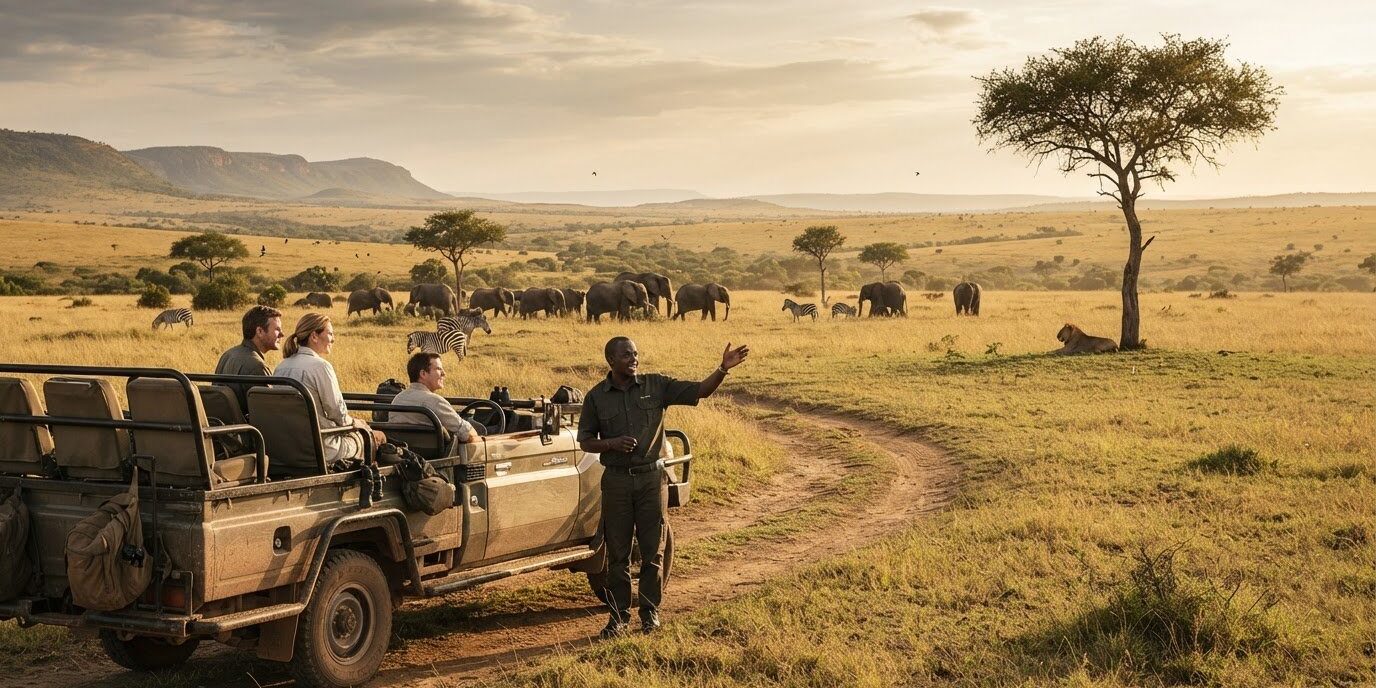
What if your first Kenya safari feels less like following a fixed itinerary and more like choosing an adventure that suits you? It’s natural to wonder where to go, how game drives work, and whether you’ll see the wildlife you’ve travelled for. A Kenya safari for first timers can be deeply rewarding, but no two trips unfold in exactly the same way, and wildlife sightings can’t be guaranteed.
This guide explains what a safari day may involve, which decisions shape the experience, and how to prepare without feeling you need to know everything in advance. You’ll see how private and group-joining formats differ, and how timing, travel pace, accommodation and the number of days available can influence your plans.
We’ll also cover practical details, from ground transport and professional guides to park-entry arrangements and booked accommodation. Start by deciding what matters most to you, then use those priorities to shape a safari that fits your interests rather than relying on a one-size-fits-all itinerary.
Key Takeaways
- A Kenya safari for first timers is a guided wildlife experience, but daily routines and animal sightings can vary.
- Choose destinations and itinerary length around the wildlife and landscapes that interest you, the time you have, and the pace you prefer.
- Private and group safaris offer different ways to travel. Your choice depends on how much flexibility and shared experience you want.
- Prepare by checking current official travel and health guidance, organizing your documents, and packing for your itinerary.
- Local expertise can help shape or adjust an itinerary to suit your interests and preferences.
What a First Kenya Safari Is Really Like
A safari is a guided wildlife experience. You spend time observing animals in their natural habitats rather than following a scripted attraction. Your guide helps you notice tracks, behaviour and changes in the surroundings, while plans may shift with weather, road conditions and activity in the bush. A wildlife of Kenya overview offers a sense of the country’s varied animal life, but no itinerary can promise a particular sighting.
A zoo displays animals in managed enclosures; a safari is a guided search for wildlife living in its natural habitat. That difference helps set expectations. Some drives bring memorable encounters, while others offer quieter observation of the landscape, birds or signs of animal activity. Patience is part of the experience, not a sign that the outing has gone wrong.
Safari days often follow a rhythm of game drives, meals and time to rest at your accommodation. Drives may be planned for periods when wildlife is active, with the exact routine shaped by the itinerary and local conditions. Between outings, you can eat, rest and get ready for the next drive. A Kenya safari for first timers can be exciting without every hour being filled with activity.
What happens during a typical game drive?
Your professional guide leads the wildlife viewing, choosing where to go and adapting the outing to conditions and observations along the way. You’ll usually watch from a vehicle, scanning for animals, birds and signs such as tracks. A particular species may not appear on every drive, so give each outing time to unfold instead of treating it as a checklist.
Keep your movements calm, listen closely and follow your guide’s instructions around wildlife. Quiet observation can help you notice details you might otherwise miss, from an animal’s behaviour to changes in the sounds of the landscape. If the vehicle pauses, take time to look carefully and ask your guide a question when appropriate. Each drive has its own character.
What should first-time visitors expect at safari accommodation?
Accommodation is part of the safari experience, and the type of place you stay can vary with your itinerary. Your booked accommodation provides a base between drives, but facilities and setting differ from one trip to another. Before choosing a package, consider how the stay fits the travel pace and activities you want.
Time at your accommodation may be set aside for meals, a rest between outings and getting ready for the next drive. You might return with time to relax, or have a shorter pause before the day continues, depending on the itinerary. Safari packages can coordinate ground transport, professional guides, park-entry arrangements and booked accommodation, bringing the practical parts of the journey together while allowing each day to feel distinct.
How Time, Season, and Wildlife Shape a Kenya Safari
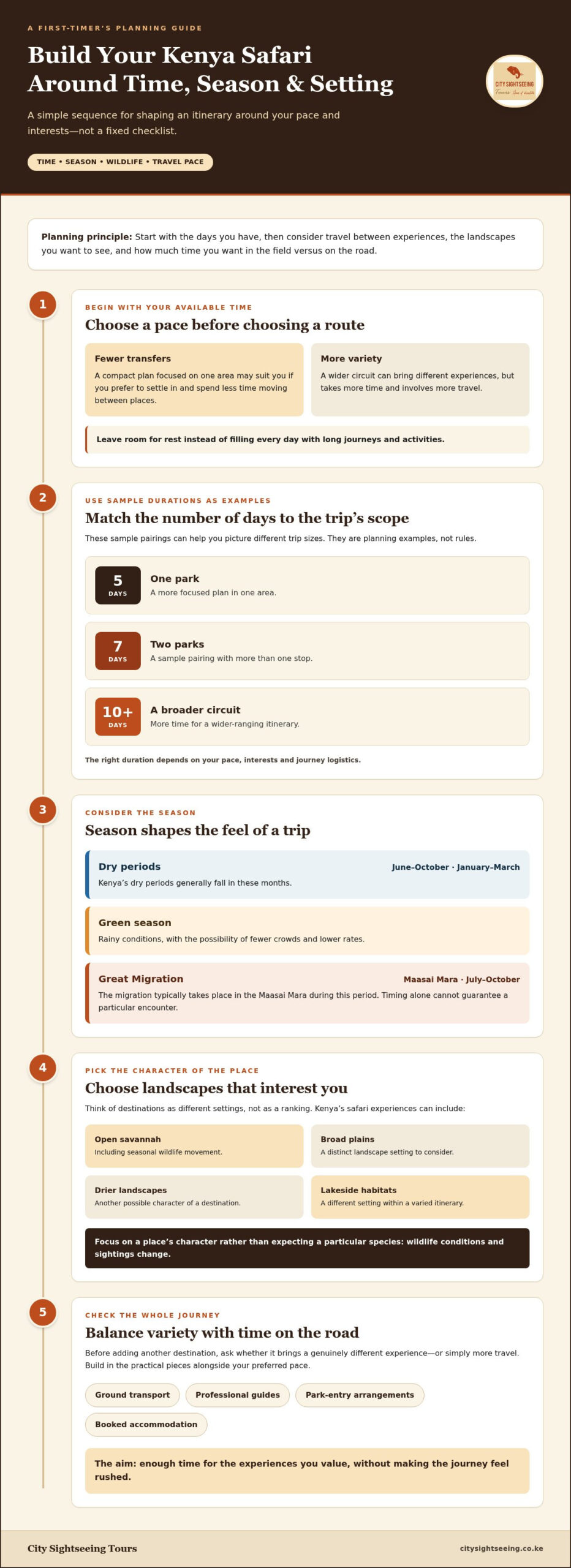
Build your safari around your priorities, rather than starting with a fixed number of days or a checklist of places. Think about how much time you have, which wildlife and landscapes interest you, and whether you’d rather settle into fewer places or keep moving. Each choice affects the balance between time in transit, time in the field and quieter moments along the way.
Season also shapes the feel of a trip. Kenya’s dry periods generally fall from June to October and January to March, while the green season brings rainy conditions, with the possibility of fewer crowds and lower rates. The Great Migration typically takes place in the Maasai Mara from July to October, but timing alone cannot guarantee a particular encounter. For general destination inspiration, the Kenya Tourism Board offers an official starting point for exploring travel in Kenya.
How should first-timers think about safari duration?
Start with the days you have, then allow time for travel between experiences. A compact plan focused on one area may suit someone who prefers fewer transfers. A wider circuit can offer more variety, but takes more time. Leave room for rest rather than filling every day with long journeys and activities.
Sample plans sometimes pair five days with one park, seven with two, or ten or more with a broader circuit. Treat these as planning examples, not rules. The right duration depends on your pace, interests and journey logistics. A step-by-step Kenya safari planning guide can help you work through those choices in sequence.
No single safari duration suits every first-time visitor. Choose a length that leaves enough time for the experiences you value without making the journey feel rushed.
How do Kenya’s safari destinations differ?
Think about destinations as different settings, not as a ranking. Some offer open savannah scenery and seasonal wildlife movement; others have broad plains, drier landscapes, lakeside habitats or different combinations of scenery and wildlife. Conditions and sightings change, so focus on the character of a place rather than expecting to see a particular species.
For a Kenya safari for first timers, begin with the landscape or wildlife experience that interests you most. Then consider whether adding another destination would bring a genuinely different experience, or simply more time on the road. Local expertise can help shape or adjust an itinerary around your preferences, with ground transport, professional guides, park-entry arrangements and booked accommodation coordinated as part of safari packages. To turn your priorities into a personal plan, explore tailored Kenya safari planning.
Private or Group Safari: Which First-Timer Experience Fits?
Choosing between a private and group safari is less about finding a universally “best” option and more about how you like to travel. Consider whether you value room to shape the pace around your interests or would enjoy sharing the experience with other travellers. Look at the whole arrangement too: itinerary, ground transport, guiding, park-entry arrangements and booked accommodation all affect how the trip flows.
| What to consider | Private safari | Group-joining safari |
|---|---|---|
| Flexibility | May suit travellers who want an itinerary tailored to their interests and preferred pace. | Shared plans mean considering the group’s interests and agreed itinerary. |
| Shared experience | Offers a more personal travel arrangement for the people on the trip. | Creates opportunities to experience the journey alongside other safari-goers. |
| How you move | Can suit you if you’d like the trip planned around your priorities. | Can suit you if you’re comfortable travelling within a shared arrangement. |
Neither format guarantees particular wildlife sightings or makes every part of the journey identical. Before deciding, consider how the itinerary, transport, guide arrangements and accommodation work together. This helps you picture not only the game drives but also the transitions between destinations and the rhythm of time spent travelling.
When might a private safari suit a first-timer?
A private trip may appeal if you’d like to shape the itinerary around specific interests, travel at a comfortable pace or make room for preferences within your party. City Sightseeing Tours arranges private Kenya safari packages, with itineraries tailored or adjusted to individual tastes. This option gives you a more personal planning approach, while the experience itself depends on the itinerary you choose.
What should you understand about a group-joining safari?
A group-joining safari brings travellers together within a shared arrangement, so it helps to be comfortable with collective plans and the preferences of fellow guests. City Sightseeing Tours arranges group-joining Kenya safaris. Consider whether the itinerary and travel rhythm suit you, and avoid assuming every group trip follows the same schedule or structure.
To choose, ask yourself what matters most: tailoring, shared company or a balance between the two. Then consider how the planned transport, guiding and accommodation support that preference, rather than judging the safari format in isolation. Local experts can help shape an itinerary around individual interests and adjust plans to suit personal preferences. If a tailored approach feels right, explore bespoke Kenya safari planning.
What to Prepare Before Your First Kenya Safari
A little preparation can make your first safari more comfortable without turning planning into a second job. Review current travel advice, organize the documents relevant to your journey, then pack for your itinerary and expected conditions rather than relying on a one-size-fits-all checklist. If you have mobility needs, dietary preferences or other personal considerations, share them during itinerary planning so they can inform the arrangements.
Before departure, recheck official entry, health and travel guidance, since advice can change and the right information depends on your circumstances and travel dates. Use current government sources for questions about entry documents, health precautions and travel advisories. Avoid relying on old posts or assumptions based on another traveller’s situation.
- Review current guidance. Look up official information relevant to your passport, route and health needs, then revisit it close to departure in case advice has changed.
- Organize your documents. Keep your travel paperwork together and make sure you can access the information needed for your journey and booked arrangements.
- Pack for your plans. Consider the season, itinerary, time outdoors and your personal comfort before choosing clothing and everyday items.
What should you organize before departure?
Start with entry, health and travel information from appropriate official sources. Requirements and recommendations can vary by traveller and change over time. If you’re uncertain about a health question, seek guidance from a qualified health professional familiar with your circumstances. Let your safari team know about mobility, dietary or other personal preferences while planning, so local experts can consider them when shaping the itinerary.
What helps make game drives comfortable?
Choose practical clothing that feels comfortable outdoors and can be adjusted to changing conditions. Lightweight, neutral-coloured layers may suit warm daytime conditions, while a warmer layer can be useful during cooler early starts. Comfortable walking shoes, a hat, sunglasses and sun protection may also help, depending on your plans and preferences. Binoculars or a camera can be useful if you enjoy watching or photographing wildlife, but there’s no single packing list for every itinerary.
Keep personal medication and other items you rely on in your day-to-day routine accessible. Pack with the accommodation and activities in your plans in mind rather than assuming particular facilities will be available. During drives, follow your guide’s directions around wildlife and ask for help if you’re unsure how to respond. A calm, observant approach supports a more comfortable outing.
Thoughtful preparation leaves room to enjoy the experience instead of worrying over every detail. If you’d like your itinerary to reflect your preferences from the outset, explore bespoke Kenya safari planning.
Plan Your First Kenya Safari with Local Expertise
You’ve explored the choices that give a safari its shape: the wildlife and landscapes that interest you, the pace you prefer, how much time you have, and whether you’d enjoy travelling privately or as part of a group. Bring those preferences together and planning becomes less about finding a perfect, universal itinerary and more about creating a journey that feels right for you.
Local expertise can help turn those ideas into practical possibilities. City Sightseeing Tours arranges bespoke, private and group-joining Kenya safaris, with itineraries that can be customized or altered to suit individual tastes. This support helps you consider how your priorities fit together, without assuming one destination, route or travel style suits every first-time visitor.
Turn your interests into a first-safari brief
Before planning, jot down a few notes. They don’t need to form a finished itinerary. Use them as a starting point for shaping a Kenya safari for first timers around what matters to you.
- Wildlife interests: Note the animals or kinds of wildlife observation that appeal to you, while keeping expectations open because sightings vary.
- Travel pace: Consider whether you’d prefer to spend more time in fewer places or include a broader variety of experiences.
- Available time: Share your travel window and any other plans that affect how much of the journey can be devoted to safari.
- Destination character: Think about the scenery and setting you’d most like to experience.
- Safari format: Reflect on whether a private arrangement or shared group journey feels more comfortable for you.
These details give local experts a clearer sense of your priorities. They can use them to tailor or adjust itinerary possibilities, bringing together the route, pace and arrangements in a way that reflects your tastes. Your brief is a guide for planning, not a promise of a specific route, accommodation or wildlife encounter. If you’re ready to explore a more personal approach, consider bespoke safaris in Kenya.
Choose a next step that feels comfortable
You don’t need to settle every detail before beginning. Compare itinerary possibilities against your priorities, including how the journey’s pace and format feel to you. With local guidance, you can refine your ideas as you learn more and make choices with greater confidence, while leaving room for the experience to unfold naturally.
Take your time and start with what excites you most. Explore Kenya safari options and begin shaping a first safari around your interests, available time and preferred way to travel.
Make Your First Safari Your Own
Turn your ideas into a starting point: what you hope to experience, how you like to travel and what would help you feel comfortable along the way. Those preferences can guide a conversation about a safari that feels personal rather than pre-set. For a Kenya safari for first timers, having room to shape the journey can make planning feel more manageable and the experience more meaningful.
City Sightseeing Tours tailors itineraries to individual tastes, with private and group-joining safari options and packages that coordinate professional guides, ground transport, park-entry arrangements and booked accommodation. Begin with a few priorities and refine them as you explore what might suit your trip.
Explore Kenya safari options and take the next step at a pace that feels right for you. Your first safari can begin with one simple idea, then grow into a journey you’ll be glad you made.
Frequently Asked Questions
Is Kenya a good destination for a first safari?
Yes, Kenya can be a rewarding introduction to safari travel, with guided experiences that can be shaped around your interests and available time. You don’t need prior wildlife knowledge or safari experience to get started. Think about what would make the trip meaningful to you, whether that’s learning about animal behaviour, spending time outdoors or experiencing varied landscapes. Since wildlife is free-ranging, stay open to the encounters each day brings.
Can I see the Big Five on a Kenya safari?
You may see some or all of the Big Five, but sightings of all five can’t be promised. The name refers to lion, leopard, elephant, rhino and buffalo, which move freely through their natural habitats. If particular animals interest you, mention that while planning so your priorities can inform the itinerary. Keep space for unexpected moments too: a bird in flight or fascinating behaviour can be just as memorable as a familiar headline species.
What happens if it rains during a Kenya safari?
Rain doesn’t automatically mean a safari stops, but it can affect road conditions, visibility and the comfort or timing of an outing. Your guide can advise you as conditions unfold, so follow their directions and allow plans to adapt. A light rain layer may be useful depending on your travel dates and itinerary. If weather concerns you, raise them during planning and check current travel guidance before departure.
Is a Kenya safari suitable for children?
A safari can work well for a family when the itinerary reflects the children’s interests, comfort and ability to follow guidance around wildlife. Consider how they handle time in a vehicle, early starts and quieter periods, then plan a pace that gives everyone room to enjoy the trip. For example, a child who loves spotting details may enjoy watching birds or tracks as well as larger animals. Share family preferences early.
Can I take photographs during a Kenya safari?
Yes, you can take photographs, provided you follow your guide’s instructions and avoid disturbing wildlife. You don’t need specialist equipment to make meaningful memories; a phone or camera you’re comfortable using can be enough. Before a drive, check that your device is charged and has room for photos, so you’re not sorting it out during an encounter. Be considerate of others, and remember to put the camera down and enjoy the moment too.
Do I need previous wildlife knowledge to enjoy a safari?
No, you can enjoy a safari without knowing animal names or behaviours in advance. Bring your curiosity and ask your guide questions when the moment allows. A sighting can become more engaging when you learn to notice how an animal moves or interacts with its surroundings. If conservation, habitats or particular species interest you, mention that when planning. There’s no test to pass before you can appreciate being out in the wild.