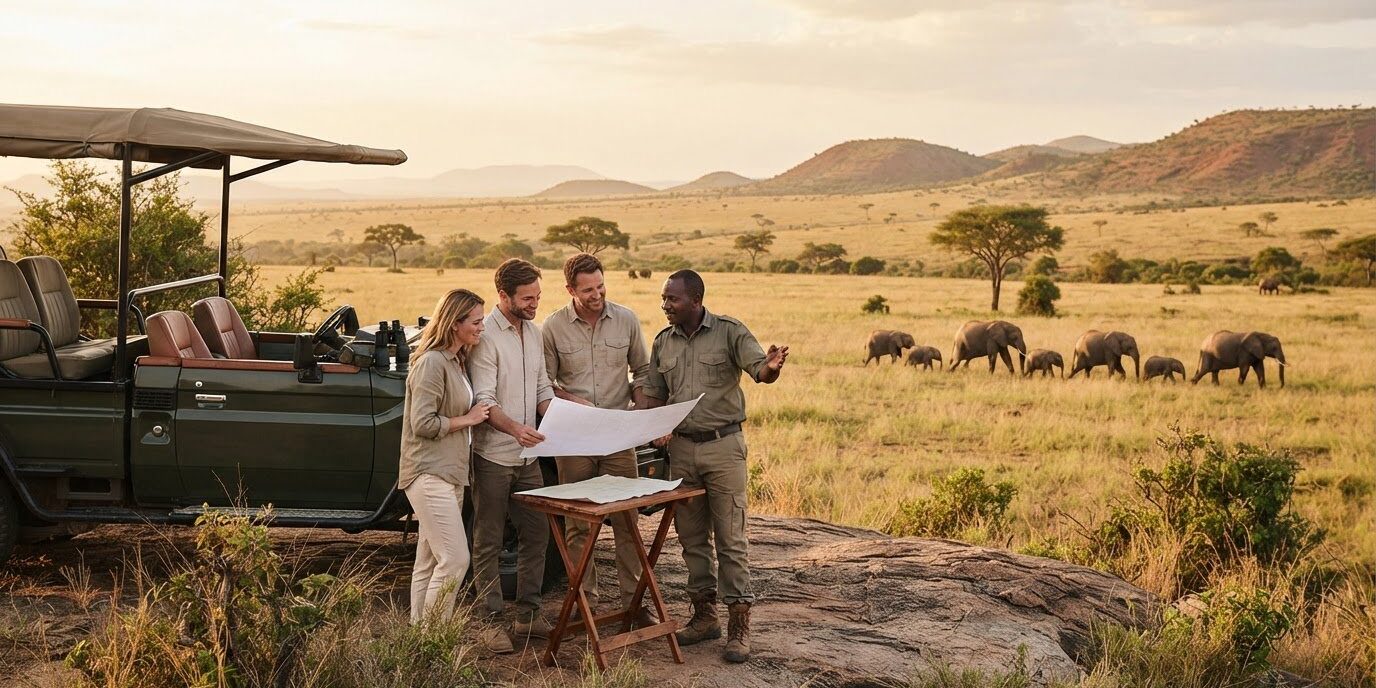
The best safari isn’t necessarily the one with the longest wish list. With bespoke safaris in Kenya, you can shape the journey around what matters to your travel party, then make practical choices about how the experience comes together.
Tailored planning doesn’t have to mean making endless decisions. Start by identifying your main priorities, then consider how they fit with the itinerary, accommodation and transport. This keeps the process focused on choices that will make a real difference to your trip.
This guide explains what you can shape, how to distinguish must-haves from nice-to-haves, and what to share when planning. It also covers how local expertise can bring your choices together with ground transport, professional guides, park entry arrangements and booked accommodation.
At City Sightseeing Tours, safari arrangements can be adjusted to suit individual tastes, and local experts can help plan an itinerary around your preferences. Whether you’re travelling with family, friends or as a couple, begin with what you most want to experience. From there, you can build a journey that feels personal and considered.
Key Takeaways
- A bespoke safari is shaped around your stated preferences, while a fixed package follows a pre-arranged structure that may already suit your plans.
- Consider your interests, preferred daily pace, travel-party needs and comfort priorities. Separate essentials from flexible extras.
- Compare bespoke safaris in Kenya with fixed-package and group options to see which format best matches how you want to travel.
- Rank your must-haves, nice-to-haves and flexible choices before planning to make your safari wish list clearer and more manageable.
- City Sightseeing Tours’ local experts can help shape your itinerary and coordinate key booking arrangements around your priorities.
What makes bespoke safaris in Kenya different from standard packages?
A bespoke safari is shaped around the traveller’s stated preferences, rather than following the same fixed itinerary for everyone. With bespoke safaris in Kenya, you can discuss what matters to your party and have the arrangements adjusted to suit individual tastes. Local experts can help turn those priorities into an itinerary.
A standard package has a pre-arranged structure. It can be a good fit if its pace, accommodation style and included arrangements already match what you want. Tailored planning gives you more room to focus on particular interests or travel needs. Neither format is automatically better. The difference is how closely the starting plan reflects your choices.
A bespoke safari is a planned journey shaped by your priorities; a standard package follows an itinerary arranged in advance. Personalisation doesn’t mean every idea can be combined. It means identifying what matters most and making practical trade-offs so the trip feels coherent. For broader context on the country’s visitor experience, explore this overview of Tourism in Kenya.
Think of the plan as connected arrangements, not a collection of separate add-ons. Ground transport, professional guides, park entry arrangements and accommodation bookings all need to work together. If you prioritise a particular kind of experience or a gentler daily rhythm, those preferences can guide the conversation while the itinerary balances them with the practical needs of the journey.
What does bespoke mean when planning a Kenya safari?
It means sharing clear preferences and using them to shape the safari booking. A label such as “unique” doesn’t explain what has been tailored. Meaningful personalisation shows up in decisions that reflect your interests, pace or comfort preferences. For example, a party keen to spend time observing wildlife might prioritise a less hurried rhythm, while travellers with varied interests may want a different balance. State what you value, then shape the plan around it.
Who benefits most from a tailored safari?
Tailored planning can help travellers with a particular interest, families or friends with different needs, and anyone who wants specific comfort preferences reflected in the arrangements. It can also suit a party that wants to discuss how the itinerary fits together instead of choosing only from a fixed structure. A standard package may work just as well if its existing plan aligns with your priorities. Begin with your actual needs, not the assumption that a bespoke trip must include more.
Keep the first conversation focused: identify your main interest, the pace that feels comfortable, and any needs shared by the group. Then decide where you can be flexible. Local planning support can bring those preferences together with the key booking arrangements, making the choices clearer without turning your safari into an unmanageable wish list.
Which parts of a bespoke Kenya safari can reflect your preferences?
A tailored safari can reflect more than where you hope to go. Your interests, preferred daily rhythm, travel-party needs and comfort preferences can all guide the planning conversation. Your priorities provide the outline; thoughtful choices turn them into a balanced safari plan.
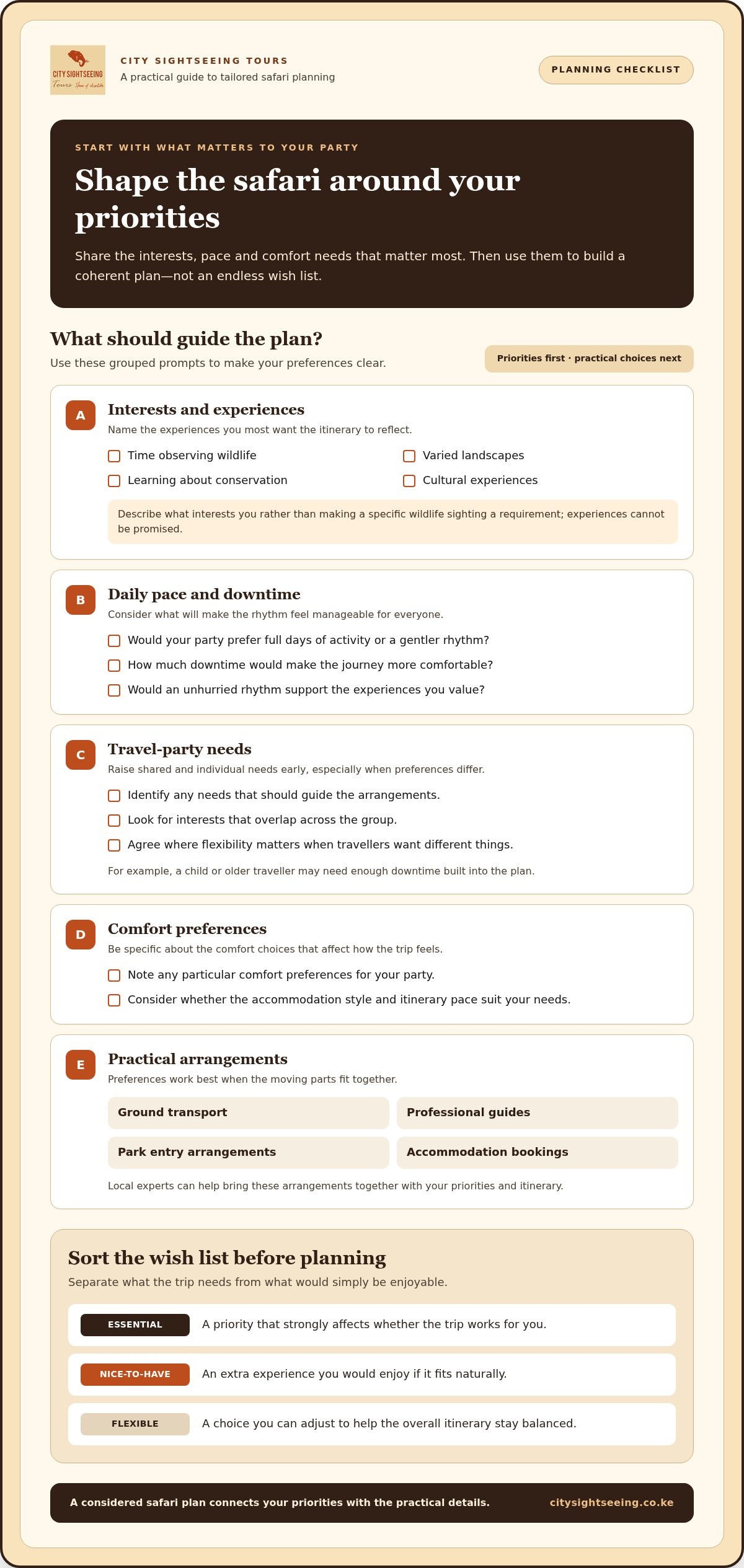
Start by separating essentials from nice-to-haves. An essential is something that strongly affects whether the trip works for you, such as allowing enough downtime for a child or older traveller. A nice-to-have might be an extra experience you’d enjoy if it fits naturally. This distinction keeps the plan focused instead of letting the wish list grow without direction.
Match safari interests to the experience you want
Consider what draws you to a safari: time observing wildlife, varied landscapes, learning about conservation, or cultural experiences. You don’t need to plan every moment yourself. Share a short list of the experiences that matter most, and local experts can use it to help shape a coherent itinerary around your interests, rather than trying to fit in every appealing possibility.
If conservation is part of your motivation, you may also want to learn about how conservation work and communities intersect in Kenya. The Nature Conservancy Kenya provides context on conservation efforts, community conservancies and human-wildlife coexistence. This can help you consider the values you’d like your travel choices to reflect, without assuming any particular encounter is guaranteed.
Keep expectations grounded. Wildlife and other experiences can’t be promised, so describe what interests you rather than treating a specific sighting as a requirement. For example, “time for unhurried wildlife observation” gives planners a useful priority while leaving room for the realities of travel.
Set the pace and comfort preferences for your travel party
A rewarding itinerary should feel manageable for everyone travelling. Consider whether your group prefers full days of activity or a gentler rhythm, how much downtime would make the journey more comfortable, and whether anyone has particular needs that should guide the arrangements. Raising these points early makes it easier to discuss different preferences before the plan takes shape.
For a group with mixed preferences, identify where interests overlap and where flexibility matters. Some travellers may prefer a busy schedule, while others value a slower pace. Agreeing on a shared priority can help the itinerary take the whole party into account. Comfort preferences deserve the same attention, whether they relate to the general style of the trip or how much movement feels suitable.
- Essential: A need or priority that should guide the plan.
- Flexible: An appealing extra that can fit if the itinerary allows.
- Open question: A preference your party is willing to discuss together.
City Sightseeing Tours can adjust safari packages to suit individual tastes, with local experts helping plan itineraries. To explore how your priorities might come together, begin with bespoke safari planning.
Bespoke, fixed-package, or group safari: which format fits you?
Choosing a safari format is about matching the planning style to your preferences, not finding one universally “best” option. Bespoke safaris in Kenya allow room to adapt arrangements around particular priorities. A fixed package provides a pre-set structure, while a group safari suits travellers who are comfortable sharing a planned experience. Each can work well when it fits the way you want to travel.
Use this comparison as a starting point. The best fit depends on how much input you want and whether an existing plan already reflects your needs.
| Format | Flexibility | Shared planning | May suit travellers who… |
|---|---|---|---|
| Bespoke | Preferences can guide how the itinerary is shaped. | Planning centres on your stated priorities. | Have specific interests, comfort preferences or needs they want reflected. |
| Fixed package | Follows an itinerary arranged in advance. | Choices are guided by the package’s existing structure. | Find that the planned format already matches what they want. |
| Group joining | Follows a shared planned experience. | Travellers take part alongside others. | Are comfortable with shared arrangements and a set plan. |
One common concern is that tailored planning means endless decisions. It doesn’t. A bespoke safari still has structure: you share your priorities, consider practical trade-offs, and focus on the choices that will make a difference to your trip. The aim isn’t to include everything, but to make the plan considered and manageable. Explore bespoke safari options to see how a tailored approach can take shape.
When does a bespoke safari make more sense?
Consider a tailored format if you have a particular interest, a preferred travel rhythm or shared-group needs that call for adjustments to an existing plan. Flexibility is most useful when it addresses a real planning need, such as making room for a priority experience or taking different comfort preferences into account. If no meaningful changes are needed, a fixed option may serve you just as well.
When might a fixed or group format be a better fit?
A fixed package can be practical if its structure already suits your expectations, letting you choose a ready-planned experience without reshaping it. Group joining may fit if you’re happy to share the planned safari with other travellers rather than centring the arrangements on your party alone. Be honest about how much flexibility you want; that distinction can make the decision clearer.
Before choosing, ask yourself: do I need the plan adapted, does the existing structure suit me, and am I comfortable sharing the experience? Your answers can point you towards the format that fits your priorities, without assuming that more personalisation is always better.
How to turn your safari wish list into clear planning priorities
A useful planning conversation doesn’t require a finished itinerary. Start with an honest picture of what you hope to experience, what your travel party needs, and where you’re willing to be flexible. A little preparation helps local experts understand what matters most and use those priorities to guide practical choices for bespoke safaris in Kenya.
Before discussing a tailored safari, organise your thoughts with this step-by-step guide to planning a Kenya safari and explore Kenya safari itinerary planning tips for 2026:
- Choose your must-haves. Name the experiences or needs that would make the trip feel right for you. Keep this list focused on what genuinely matters.
- Note your nice-to-haves. Add appealing extras you’d enjoy, while recognising they don’t need to shape the whole plan.
- Mark flexible choices. Identify preferences you’d consider adapting if another arrangement better supports your main priorities.
- Describe your travel party. Share who is travelling and any shared needs or preferences that should inform the planning conversation.
Rank your must-haves before the flexible extras
Start with the priorities that matter most, whether they relate to an experience, the pace of the trip or a practical need. Then separate them from ideas you’d enjoy if they fit. For instance, a preferred rhythm might be essential, while an additional activity could remain flexible. This distinction gives your brief direction and prevents a long wish list from obscuring the decisions that matter.
Share the travel-party context that can shape the plan
Explain who will be travelling together and where your preferences overlap or differ. A family, a group of friends and a couple may bring different expectations. Individual travellers may also have comfort or accessibility considerations they want reflected. Mention your preferred pace, the amount of downtime that feels comfortable and any relevant needs early, so these details can inform planning rather than becoming last-minute additions.
Be clear without prescribing every detail. You might say that your party prefers a gentler rhythm, or that everyone shares an interest but has different comfort preferences. This gives the planning conversation a useful starting point while leaving room for local expertise to shape the practical arrangements. If you’re uncertain about a preference, describe what you’re hoping for and where you could adapt.
City Sightseeing Tours’ local experts can use your priorities to help plan an itinerary. Safari booking arrangements bring ground transport, professional guides, park entry arrangements and accommodation bookings together. The clearer your brief, the easier it is to discuss how those elements can support your travel preferences.
Ready to turn your priorities into a tailored plan? Start planning your bespoke Kenya safari with City Sightseeing Tours.
Plan your bespoke Kenya safari with City Sightseeing Tours
City Sightseeing Tours is a Kenya-based operator offering safari bookings that can be customised or adjusted to suit individual tastes. If you’re considering bespoke safaris in Kenya, start with what you want your trip to feel like rather than trying to fit a standard set of preferences. Share the experiences and practical needs that matter to you, and local experts can help shape itinerary plans around them.
A tailored booking also brings key arrangements together. Safari booking arrangements coordinate ground transport, professional guides, park entry arrangements and booked accommodation, connecting your stated priorities with practical elements of the journey. The aim is a considered, joined-up plan that keeps your preferences at the heart of the conversation.
What to share when beginning a bespoke safari enquiry
You don’t need to arrive with every decision made. Start with a clear picture of your travel party and the experiences you hope to prioritise. It also helps to explain what is essential and where you’re open to alternatives. This gives the planning discussion direction without requiring a detailed itinerary.
- Interests: Note the wildlife, landscapes or other experiences that appeal to you.
- Party preferences: Explain who is travelling and any shared needs or differing expectations.
- Flexibility: Identify your non-negotiables, then mention which choices could adapt.
Even a short outline is useful. For instance, you might say that a particular experience matters most, while the timing or daily rhythm is flexible. That gives the conversation a practical starting point and helps keep attention on decisions that support your priorities.
How local planning support brings preferences together
Local experts can use your stated tastes to help shape itinerary plans, bringing local understanding to the choices you discuss. Their role is to translate what you value into a practical plan, rather than leaving you to work through every planning detail alone. Share what you hope for and consider the options together.
The arrangements are connected: ground transport, professional guides, park entry arrangements and booked accommodation all contribute to how the journey comes together. Coordinating these elements around your preferences can create a more joined-up booking, with a clear connection between the experiences you prioritise and the arrangements that support them.
Bring your ideas, questions and must-haves, even if they’re still taking shape. City Sightseeing Tours can help you explore a tailored safari plan that reflects what matters to your party. Start planning your bespoke safari.
Let your priorities shape the journey ahead
Your first step doesn’t need to be a complete itinerary. Begin with one question: what would make this journey meaningful to you and the people travelling with you? Your answer can turn broad ideas into a thoughtful starting point, with room to refine the details together.
With bespoke safaris in Kenya, the value lies in making considered choices, not fitting every possibility into one trip. Share what you’re drawn to, what your party needs, and where you’re happy to be flexible. City Sightseeing Tours can help you explore those preferences with local planning support, shaping a safari booking that brings your priorities and practical arrangements together.
Start with what matters most to your party. Plan your bespoke safari with City Sightseeing Tours.
Frequently Asked Questions
What does bespoke mean for a Kenya safari?
For a Kenya safari, bespoke means the booking is adjusted in response to the preferences you share, rather than simply accepted as presented. You might explain that wildlife viewing is your main interest, while your party would also appreciate a quieter day between outings. That context can guide the planning discussion. Bespoke safaris in Kenya still involve practical considerations, so personalisation doesn’t mean every possible option can be combined.
Can I customise a Kenya safari around my interests?
Yes. Share the experiences and travel style that appeal to you, then have the safari arrangements shaped around your tastes. For example, let the planner know whether you’re drawn to wildlife, landscapes or cultural experiences, and which matters most. A short, focused list is often a clearer starting point than trying to include every idea. Sightings and particular encounters can’t be guaranteed.
Are bespoke safaris in Kenya suitable for families?
They can suit families who want their shared needs and different interests considered during planning. Mention the general pace your family prefers, comfort considerations, and whether travellers have different ideas about how to spend their time. Suitability depends on your priorities and the arrangements being planned, so be clear about what would make the trip manageable for your family. Don’t assume a particular amenity or outcome.
Can a bespoke safari include both wildlife experiences and beach time?
You can discuss combining wildlife-focused travel with beach time as part of a tailored holiday. The right balance depends on what your party most wants from the trip and the practical arrangements involved. Consider whether one interest is the main focus or whether you’d like both to have similar importance. Sharing that preference gives local experts a helpful basis for discussing a plan without assuming a particular schedule or combination.
How much does a bespoke safari in Kenya cost?
There isn’t one figure that applies to every tailored safari, because the booking depends on the arrangements and preferences you choose. A trip shaped around one set of priorities may differ from a plan with different requirements, so an industry-wide range wouldn’t tell you what your booking would cost. Share your travel priorities with City Sightseeing Tours through the company’s website to discuss arrangements suited to your plans.
Is a bespoke safari always a private safari?
No. “Bespoke” describes the approach to tailoring a safari, while “private” and “group joining” refer to travel formats. Bespoke doesn’t automatically mean private travel. Consider both questions as you weigh your options: how much would you like the arrangements adapted to your tastes, and would you rather travel privately or join a shared experience?
What should I decide before asking about a bespoke Kenya safari?
Before starting a conversation, note who is travelling, what interests your party most, and any essential preferences that should inform the plans. It’s also useful to identify choices you’d be comfortable adapting. You don’t need a complete itinerary or a final answer to every question. A concise starting brief gives local experts a clearer sense of what matters to you and helps make the first planning discussion more focused.