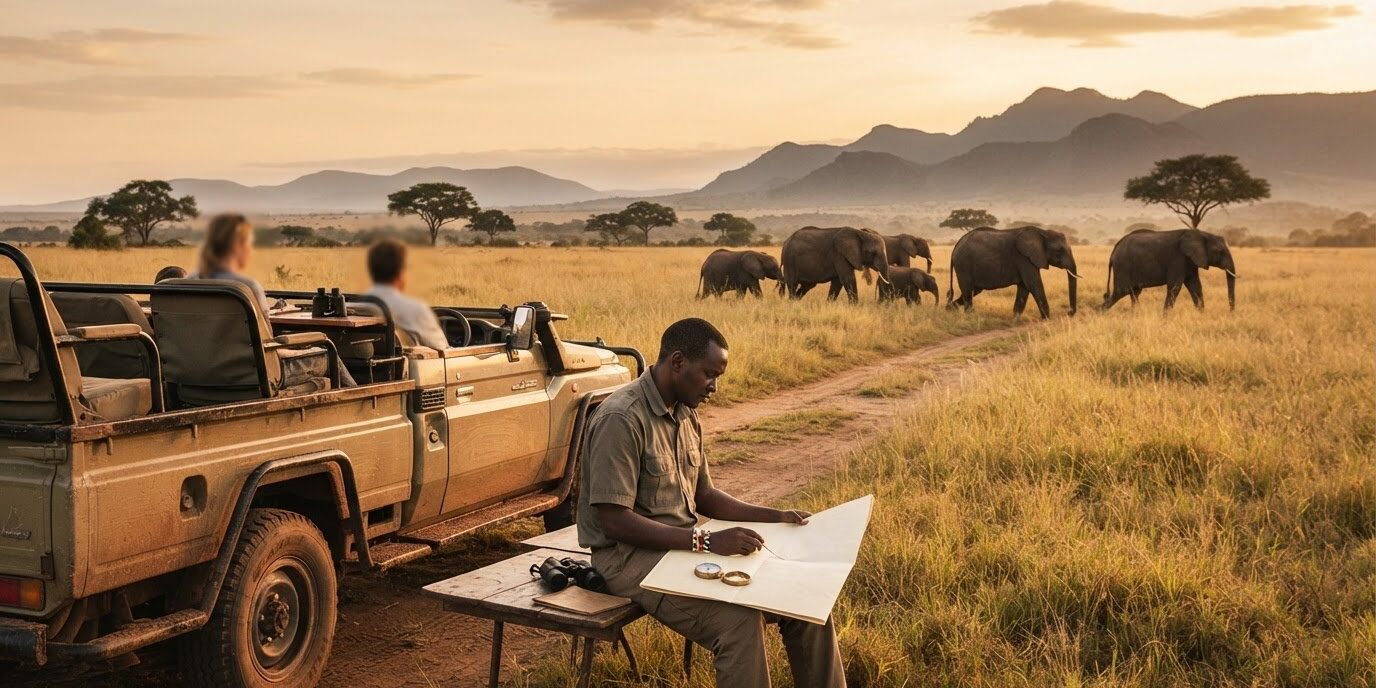
What if the best Kenya safari isn’t the one with the most stops, but the one that gives each experience room to unfold? Kenya safari itinerary planning can feel daunting when you’re weighing wildlife priorities against travel time, limited days and the choice between a private, group or customized trip. A packed schedule may look exciting on paper, yet leave too little time to enjoy the journey.
Start with what matters most to you. This guide will help you turn your interests, travel pace and practical needs into a workable itinerary, with a comfortable balance of game viewing, time on the road and rest. You’ll learn how season and route shape your options, how private and group safaris differ, and which arrangements deserve attention before departure.
Local experts can help make the planning process more personal and straightforward. Thoughtful sequencing connects your priorities with realistic travel days, while ground transport, professional guides, park-entry arrangements and booked accommodation are coordinated as part of the safari. Specific sightings can never be promised, but a well-planned journey gives you more time to discover Kenya at your own pace.
Key Takeaways
- Begin with the wildlife, scenery, culture and comfort that matter most before choosing destinations.
- Use a step-by-step approach to shape a route around realistic travel time, overnight stays and room to rest.
- Compare private, group-joining and customized safari formats to find the right fit for your preferred flexibility and schedule.
- Make Kenya safari itinerary planning more practical by organizing documents, health preparation, packing and contingency time.
- A clear travel brief helps local experts tailor a safari plan, with transport, guides, park entry and accommodation coordinated thoughtfully.
Kenya safari itinerary planning starts with your priorities
An itinerary is the planned sequence of experiences, travel legs and overnight stays that shapes your safari. In Kenya safari itinerary planning, begin with the kind of journey you want, not a list of parks to fit into every available day. Are you hoping to focus on wildlife, take in varied scenery, include cultural experiences, enjoy extra comfort, or bring several of these together?
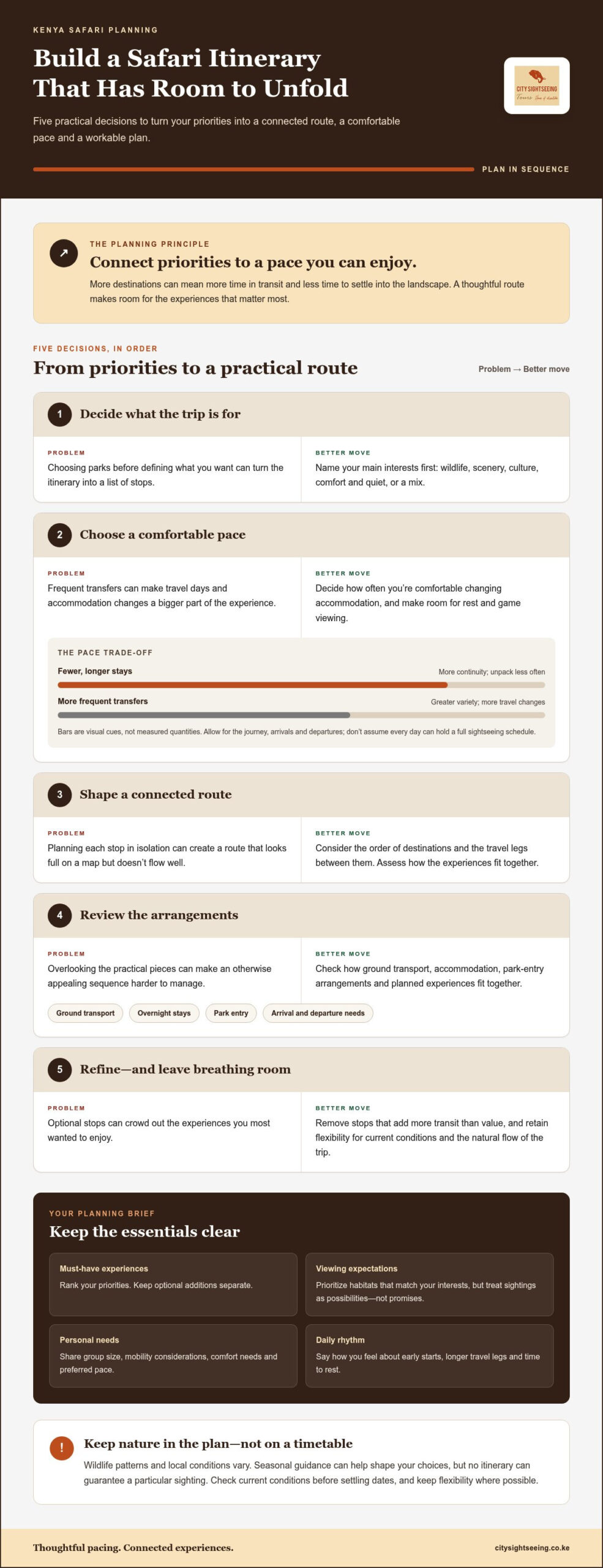
A useful rule is simple: a good safari itinerary connects your priorities to a travel pace that leaves room to enjoy each experience. Visiting more places can mean more time in transit and less time to settle into the landscape. A thoughtfully paced route may suit you better than a packed schedule, especially if you want quiet moments between drives. The word “safari” has a rich history; explore its History and meaning of safari as you begin shaping your trip.
Turn safari interests into a clear planning brief
Give your preferences some order before considering a route. Rank what matters most, then separate essential experiences from those you’d enjoy if time and travel flow allow. This brief helps keep the itinerary focused and gives local experts useful details to work with. It also makes trade-offs easier: if two priorities compete for the same time, you can decide which one matters more before the route is finalized.
- Wildlife: Which animals or types of viewing interest you most? Treat these as priorities, not guaranteed sightings.
- Scenery: Would you like open plains, lakes, forests or a varied landscape?
- Culture: Are cultural experiences central to your trip or an optional addition?
- Comfort and quiet: How much downtime do you want, and what accommodation style would help you feel at ease?
- Travel needs: Share your group size, mobility considerations and preferred pace, including how you feel about early starts and longer travel legs.
Keep your must-haves short. For example, if wildlife viewing and unhurried mornings lead your list, optional detours shouldn’t crowd out time for either. Be candid about mobility or comfort needs, too. These details can influence the sequence of experiences, time between stops and overnight arrangements, making the journey more manageable.
Set expectations for wildlife and seasonal conditions
Wildlife moves according to its own patterns, and sightings can vary from one visit to another. A responsible itinerary can prioritize habitats and experiences that match your interests, but it shouldn’t promise that a particular animal will appear. Treat seasonality as one planning consideration among several, alongside your preferred pace, route and current local conditions.
Kenya’s dry periods, generally June to October and January to February, are often considered favorable for wildlife viewing. The Great Migration typically takes place from July to October. These are useful planning guides, not guarantees: conditions can vary, and your interests may point toward a different travel window. Before settling dates, verify current seasonal guidance and conditions through authoritative sources. A flexible plan, with breathing room where possible, helps you enjoy the experience even when nature doesn’t follow a timetable.
How to build a Kenya safari itinerary step by step
Turn your priorities into a route, then test that route against the time and practical arrangements each leg requires. This is the heart of Kenya safari itinerary planning: make decisions in an order that keeps the journey coherent, rather than adding destinations simply to make the map look fuller. Local experts can help assess how experiences fit together and where the plan needs breathing room.
Plan in this sequence: define your priorities, choose a comfortable pace, shape a connected route, review the logistics, then refine the itinerary around what matters most.
- Define your priorities. Choose the experiences you most want to make room for. Keep optional additions separate so they don’t displace the main purpose of the trip.
- Choose your pace. Decide how often you’re comfortable changing accommodation and how much time you’d like for rest, game viewing or other planned experiences.
- Shape a connected route. Consider the order of destinations and the travel legs between them. Assess how the experiences fit together rather than planning each stop in isolation.
- Review logistics. Look at how ground transport, accommodation, park-entry arrangements and scheduled experiences fit together, including arrival and departure needs.
- Refine the plan. Remove stops that add more transit than value, and leave some flexibility for current conditions and the natural flow of the trip.
Choose a comfortable pace and sequence
Fewer, longer stays can offer continuity: you unpack less often and have more time to settle into each destination. More frequent transfers may bring greater variety, but can also make travel days and accommodation changes a larger part of the experience. Allow time for the journey itself, arrivals and departures. Don’t assume each day can hold a full sightseeing schedule as well.
A professional guide can help coordinate the route’s flow and planned experiences, bringing transport and overnight arrangements into the same picture. For ideas on the range of places and experiences to consider, the Official Kenya Tourism Board can be a useful planning reference. Use inspiration to inform your route, then assess whether the sequence is realistic for your available time.
Shape each day around a main experience
Give every day a clear anchor: wildlife viewing, a transfer, a cultural experience or recovery time. If a day includes a substantial travel leg, avoid filling the remaining hours with several competing activities. A simpler plan makes it easier to enjoy the main experience without feeling hurried and gives the schedule room to absorb ordinary changes in timing.
Treat day-by-day timings as planning estimates, not promises. Confirm current arrangements for transport, accommodation and park entry before travel, and keep the itinerary adaptable where possible. A well-sequenced plan doesn’t need to be rigid; it should make the important experiences easier to enjoy.
If you’d like help turning your priorities into a connected route, bespoke Kenya safari planning can be shaped around your interests and preferred pace.
Private, group or customized Kenya safari itinerary: compare the fit
The safari format shapes how much the schedule can flex, how decisions are shared and how easily personal interests influence the route. In Kenya safari itinerary planning, the best fit depends on your preferred pace, group dynamics and whether you value an individual schedule or a shared journey. Use this comparison as a starting point, then consider how you’d like each day to feel.
| Format | Flexibility | Scheduling | Fit for personal interests |
|---|---|---|---|
| Private | Greater scope for a personal schedule | Planned around your traveling party | Interests can guide the itinerary more directly |
| Group-joining | Follows the agreed trip structure | Shared with fellow travelers | Individual preferences may have less influence on the common plan |
| Customized | Itinerary details can be adapted | Shaped around the planned journey | Local experts can tailor it to your tastes and priorities |
These are differences in planning approach, not promises about particular sightings or conditions. A customized itinerary describes how the journey is shaped around you. It may be arranged as a private safari or based on a fixed-package plan with tailored details.
When a private or group-joining itinerary may suit you
Choose a private safari if a more personal schedule matters, such as having your traveling party’s interests guide the day’s rhythm. A private safari offers your own vehicle and guide, supporting a more flexible itinerary. A group-joining safari suits travelers who enjoy sharing the experience and are comfortable following a common schedule. Neither is automatically right for everyone. Consider how your companions travel, how much flexibility you want and whether shared plans feel appealing.
How customization helps align the itinerary with your interests
Customization gives local experts room to adapt itinerary details to individual tastes. You might prioritize wildlife viewing while allowing time for comfort and rest, or balance game drives with scenery and other experiences. Share what matters most, what you’re willing to make optional and the pace that feels enjoyable. That guidance can shape the route and arrangements without controlling wildlife sightings or changing conditions.
For families or friends with different preferences, customization can help identify shared priorities and make considered compromises. A group-joining format can suit travelers who welcome a ready-made shared schedule, while a private plan may give your party greater say in its rhythm. Think beyond the format’s label: the itinerary details determine whether it feels like your kind of safari.
Kenya safari planning checklist: logistics, health and flexibility
Good preparation protects the experience you’ve planned without turning every detail into a rigid schedule. Use this checklist to connect practical arrangements with your route, then leave enough breathing room for the unexpected. Entry rules, health guidance and local conditions can change, so verify current information close to departure rather than relying on an old itinerary or a friend’s past experience.
Check travel documents and health guidance
Start with official entry information for your nationality, including current passport and Electronic Travel Authorisation (eTA) requirements where applicable. Use Kenya’s official eTA portal for application guidance, and review any updates before you travel. Requirements may differ according to personal circumstances, so don’t assume that another traveler’s process applies to you.
For health preparation, discuss your personal needs, planned activities and travel dates with a qualified healthcare professional before departure. The CDC Kenya travel health page is one source for current health notices and destination guidance, but it doesn’t replace advice tailored to your circumstances. Keep relevant documents accessible and make sure the people traveling with you know where essential information is stored.
Prepare practical details without overpacking the schedule
Before departure, compare your confirmed arrangements against the planned sequence of the trip. A small mismatch, such as an arrival time that doesn’t leave enough room for the next planned leg, can create avoidable pressure. Check that transport, booked accommodation, guide arrangements and park-entry plans align with the dates and destinations in your itinerary.
- Documents: Review passport and entry requirements, and keep key travel information easy to retrieve.
- Health: Seek personalized advice from a healthcare professional and consult current official guidance.
- Arrangements: Check transport, accommodation, guide and park-entry details against your itinerary.
- Packing: Choose clothing and essentials for your planned activities, and consult current destination-specific guidance for practical needs.
- Flexibility: Leave some unscheduled time so a change in transport or plans doesn’t force every later experience to be rearranged.
Pack for the journey you’ve planned, not every possibility you can imagine. Your route and activities can guide practical choices, while current destination-specific advice can help refine them. Just as importantly, avoid scheduling every moment tightly. A little contingency time can make an adjustment easier to absorb and give the trip a more comfortable rhythm.
Entry and health guidance can change, so verify the latest requirements with official sources and a qualified healthcare professional before departure. With the practical details thoughtfully coordinated, Kenya safari itinerary planning can feel more reassuring from the first travel leg onward. If you’d like local help aligning your arrangements with your safari route, plan your Kenya safari with City Sightseeing Tours.
Plan a tailored Kenya safari itinerary with local experts
You’ve considered what you want to experience and how you’d like to travel. Now bring those ideas together in a clear brief. Sharing your priorities with local experts gives them a practical foundation for shaping a Kenya safari itinerary around your interests, preferred pace and travel needs, while keeping the route and arrangements in view.
City Sightseeing Tours arranges customized and fixed-package safaris. A customized itinerary gives local experts room to adapt details to your individual tastes; a fixed-package option offers a planned structure for your journey. Either way, a thoughtful conversation about what matters to you helps connect the safari format with the experience you hope to have.
What to share when requesting a safari plan
Be open about the details that could shape the route and daily rhythm. You don’t need a finished itinerary before discussing your ideas. A few clear preferences can help local experts suggest a suitable plan and identify which experiences should take priority.
- Experiences: Share whether wildlife, scenery, cultural experiences or a blend is most important.
- Travel dates: Provide your preferred dates, or explain how flexible they are.
- Travel party: Note your group size and any different interests within the group.
- Preferred pace: Describe how much time you’d like for activities, transfers and rest.
- Comfort and practical needs: Mention accommodation preferences, mobility considerations or other details that could affect the arrangements.
Specificity helps. “We’d like to focus on wildlife but avoid a packed schedule” gives a planner more direction than “We want to see Kenya.” If you have must-have experiences and optional ideas, separate them in your brief. That distinction helps keep the central purpose of the trip clear while leaving room to refine the details.
Move from planning ideas to a coordinated safari
With a clear brief, local experts can shape itinerary options around your tastes and help turn separate ideas into a connected journey. Your preferences can inform the route, pace and accommodation arrangements, while the plan remains responsive to travel logistics and changing conditions. Tailoring helps align the experience with your priorities, but it can’t determine what wildlife you’ll see.
Safari packages coordinate the practical pieces as well as the itinerary: ground transport, professional guides, park-entry arrangements and booked accommodation. Seeing these elements together makes the planned sequence easier to understand and helps you consider how each part supports the overall trip.
Bring your ideas, questions and preferred pace, and explore a Kenya safari plan shaped around them with local experts. Share your safari interests with City Sightseeing Tours and begin planning your journey.
Turn your Kenya safari ideas into a journey
The most memorable journeys often begin with a thoughtful choice: deciding what you want your time in Kenya to feel like. Let that intention guide your next step. With Kenya safari itinerary planning, your first ideas don’t need to be perfectly organized; a sense of what excites you, what pace feels comfortable and what you hope to take home can provide a meaningful starting point.
As plans take shape, stay open to adjustments. A route can evolve as practical details come into focus, and a little flexibility can help the experience feel personal rather than prescribed. Your safari should reflect your curiosity and travel style, leaving room for the moments that make the journey meaningful to you.
Ready to take the first step? Start your itinerary conversation with local experts and explore a Kenya safari plan shaped around the journey you have in mind.
Frequently Asked Questions
How far in advance should I plan a Kenya safari?
Start planning once you have a rough travel window; there isn’t one lead time that suits every safari. Comparing route options and coordinating dates early can be especially helpful if your group has different needs or fixed leave dates. During Kenya safari itinerary planning, share your priorities with a local expert, then revisit entry and health guidance as departure approaches, since requirements and conditions can change.
Do I need vaccinations before travelling to Kenya?
You may need vaccinations or other health preparations, depending on your medical history and travel plans. There isn’t one recommendation that fits every traveler, so arrange a discussion with a qualified healthcare professional before departure. For current destination-specific information, review authoritative travel-health sources such as the CDC’s Kenya guidance. Seek personalized advice rather than relying on a general safari article or another traveler’s experience.
What documents should I check before travelling to Kenya?
Check the current entry and passport requirements that apply to your nationality and reason for travel using official government sources. Depending on your circumstances, this may include reviewing whether an Electronic Travel Authorisation (eTA) applies and how to apply through Kenya’s official portal. Check requirements before booking and again before departure, allow time to address anything that applies to you, and keep accessible copies of important documents.
Is travel insurance worth considering for a Kenya safari?
Yes, it’s worth reviewing travel insurance that suits your trip and circumstances. Policies differ, so read the terms for exclusions, disruption cover and any activities you plan to take part in instead of assuming they’re covered. If you’re visiting from abroad, also check current official entry guidance for any mandatory health-cover requirements that apply to your stay. Keep policy details and emergency contact information accessible while travelling.
Can children join a Kenya safari itinerary?
Yes, families can plan a safari around children’s interests, comfort and needs. Before finalizing the itinerary, consider how the youngest traveler will manage early starts, time in a vehicle and changes in accommodation. You could alternate activity-focused days with quieter time, and discuss children’s ages, mobility or other practical needs with a local expert. That context helps shape a family plan without assuming every activity suits every child.
What should I pack for a Kenya safari?
Pack for your dates, planned activities and the baggage rules that apply to your transport. Neutral, breathable clothing, a warm layer for early starts, a hat, sunscreen and insect repellent are useful considerations; binoculars may also suit your wildlife interests. If your arrangements involve a small aircraft, check its luggage requirements before packing. Bring personal essentials, follow current destination guidance, and avoid carrying items for activities that aren’t in your plans.